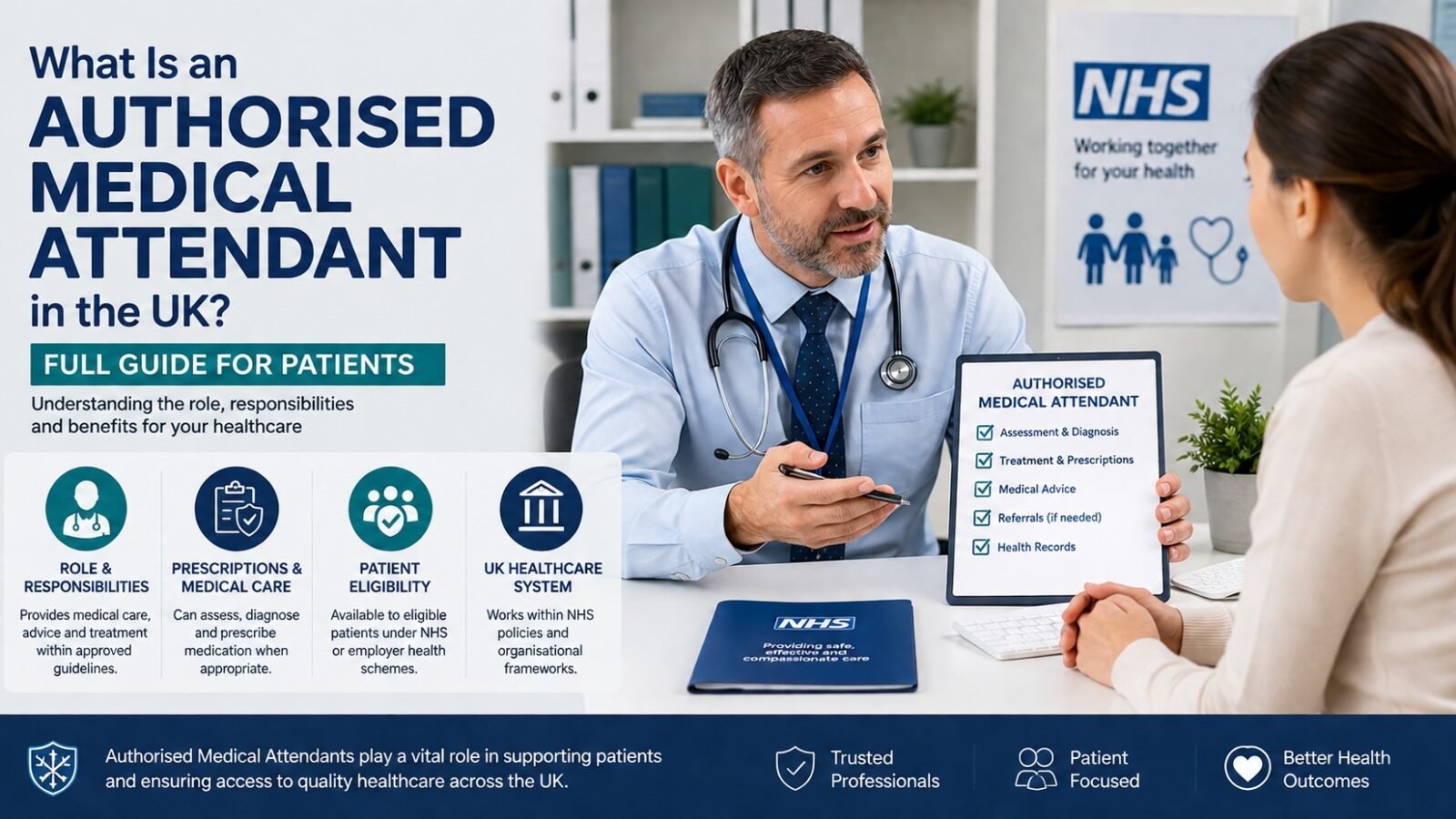
When a patient is too unwell to travel alone, whether returning home from abroad, transferring between hospitals, or flying overseas for specialist treatment, having a qualified professional alongside them can be the difference between a safe journey and a medical emergency. This is where an Authorised Medical Attendant steps in. Despite being a common term in healthcare and travel insurance circles, many UK patients and their families have never heard of it until the moment they actually need one.
This guide explains everything you need to know about an Authorised Medical Attendant in the UK, including who qualifies, what they do, how much they cost, how to arrange one, and how the role differs from a medical escort or carer. Whether you are planning medical repatriation, organising a complex hospital transfer, or simply researching options for an elderly relative, this article will give you a clear and practical understanding.
What Is an Authorised Medical Attendant?
An Authorised Medical Attendant, often shortened to AMA, is a qualified medical professional formally approved to accompany and care for a patient during travel or transfer. The professional is usually a registered doctor or nurse who holds the clinical training, equipment access, and legal authority to manage a patient’s condition while they are in transit.
The term is used in two main contexts in the UK. The first is the patient travel context, where an AMA accompanies someone on a flight, train, ambulance, or sea journey to provide medical care en route. The second is the administrative context, where the term refers to a doctor authorised by an employer or scheme (such as in some NHS or civil service arrangements) to certify medical conditions, fitness to work, or eligibility for benefits. Most patients searching for this information are looking at the first meaning, which is the focus of this guide, although we also cover the administrative meaning further down.
Who Needs an Authorised Medical Attendant?
Not every patient requires an AMA. Standard travellers with stable conditions can often manage with travel insurance and basic precautions. An Authorised Medical Attendant becomes necessary when the patient’s condition is unstable, complex, or likely to deteriorate without supervision. Common situations include:
- Patients being repatriated to the UK after a medical emergency abroad
- Elderly patients with multiple long term conditions travelling internationally
- People recovering from major surgery who must fly within a short window
- Patients on oxygen therapy, intravenous medication, or specialist equipment
- Mental health patients requiring supervised transfer between facilities
- Children with serious conditions whose parents are not medically trained
- Patients receiving end of life care who wish to travel home
Airlines and insurers often insist on an AMA for these scenarios. In fact, many travel insurance policies will refuse to authorise repatriation unless an Authorised Medical Attendant is part of the arrangement.
Roles and Responsibilities of an AMA
The job of an Authorised Medical Attendant goes far beyond simply sitting next to the patient. Their responsibilities typically include:
- Pre travel assessment: Reviewing medical notes, confirming fitness to fly, and liaising with the treating consultant.
- Equipment and medication management: Carrying and administering prescribed medication, oxygen, intravenous fluids, and emergency drugs.
- In transit care: Continuously monitoring vital signs, responding to discomfort or deterioration, and adjusting treatment as needed.
- Coordination: Handling communication with airline crew, ground ambulance teams, customs, and receiving hospitals.
- Emergency response: Acting decisively in the event of cardiac arrest, respiratory failure, or any sudden change in the patient’s condition.
- Documentation: Producing detailed handover notes for the medical team at the destination.
In many ways, an AMA acts as a mobile clinician. The aircraft cabin or ambulance becomes their treatment room, and they must be prepared for anything within the limits of the equipment they carry.
Qualifications and Requirements in the UK
There is no single national licensing body for Authorised Medical Attendants in the UK, but the professional standards expected are well established. To act as an AMA, the individual must usually meet the following criteria:
- Full registration with the General Medical Council (GMC) for doctors or the Nursing and Midwifery Council (NMC) for nurses
- Up to date training in advanced life support (ALS or ACLS)
- Experience in emergency medicine, intensive care, or aeromedical transfer
- A valid Disclosure and Barring Service (DBS) check
- Indemnity insurance covering travel and in flight medical practice
- Familiarity with airline medical equipment regulations and oxygen protocols
Many AMAs have additional qualifications such as a Diploma in Retrieval and Transfer Medicine or specific aeromedical training. For long haul or critical care transfers, agencies often pair a doctor and a specialist nurse together.
AMA in the Context of Medical Repatriation and Air Travel
Medical repatriation is one of the most frequent reasons UK patients require an Authorised Medical Attendant. If a British citizen falls ill or has an accident abroad, their travel insurer will assess whether they can return home safely on a commercial flight, and if so, whether an AMA is needed.
For air travel, the AMA must coordinate with the airline’s medical clearance department. This involves submitting a MEDIF form (Medical Information Form), arranging extra seats or a stretcher if required, and confirming that any medical equipment meets aviation safety standards. Lithium batteries, oxygen cylinders, and infusion pumps all carry specific rules.
For shorter transfers within the UK or to nearby European countries, road or rail options may be considered. In every case, the AMA’s authority comes from their clinical credentials combined with prior approval from the relevant insurer, airline, or hospital trust.
AMA Under the NHS and Civil Service Scheme
The second meaning of Authorised Medical Attendant in the UK relates to occupational health and pension administration. In this context, an AMA is a doctor formally appointed to examine an employee or pensioner and provide an independent medical opinion. This is most commonly seen in:
- NHS pension applications involving ill health retirement
- Civil Service medical assessments
- Armed forces medical boards
- Local authority occupational health referrals
The doctor in this role is authorised by the scheme administrator to determine whether a person meets specific medical criteria, such as permanent incapacity for work. While this version of the AMA does not travel with patients, the term overlaps in official documents, which is why many people become confused when researching it online.
How to Arrange an Authorised Medical Attendant in the UK
Arranging an Authorised Medical Attendant is rarely something patients do entirely on their own. The process usually involves several parties working together:
- Speak to your treating doctor to obtain a full medical summary and a fitness to travel letter.
- Contact your travel insurer if the journey relates to repatriation. Most policies cover the cost of an AMA when clinically justified.
- Engage a specialist medical assistance company or aeromedical provider. These organisations maintain rosters of qualified AMAs and handle logistics.
- Confirm airline approval through the medical clearance team, including any equipment or seating requirements.
- Plan ground transport at both ends of the journey, ensuring the AMA accompanies the patient door to door if needed.
It’s also wise to make sure all medication is in order well before the journey. If you’re based in the North West, searching for YourChemist pharmacy services near me Manchester can help you find a reliable local pharmacy that can dispense, package, and label travel medication correctly, including controlled drugs that need specific paperwork for international travel.
Cost of Hiring an Authorised Medical Attendant
The cost of an AMA varies significantly depending on the patient’s condition, distance travelled, mode of transport, and duration of the assignment. As a general guide:
- Short domestic transfers within the UK: from around £500 to £1,500
- European commercial flight escort: typically £2,500 to £6,000
- Long haul intercontinental transfer: £8,000 to £20,000 or more
- Air ambulance with full medical team: £25,000 upwards, sometimes exceeding £80,000
Costs cover the AMA’s professional fee, return travel, insurance, equipment, and any overnight stays. Travel insurance is the most common way these costs are met. Without insurance, patients or families bear the full expense, which is why comprehensive travel cover is so important, especially for older travellers or those with pre existing conditions.
Insurance, Documentation and Legal Considerations
Several legal and administrative matters must be in place before an Authorised Medical Attendant can travel with a patient:
- Patient consent: Written informed consent is essential, or proof of best interest decisions where capacity is reduced.
- Medical records: The AMA needs full access to current notes, scan results, and medication lists.
- Indemnity cover: Both the AMA and the assistance provider must hold valid indemnity insurance for the route involved.
- Drug import rules: Some countries restrict opioids or psychiatric medication. Permits may be required.
- Data protection: All medical information must be transferred and stored in line with UK GDPR.
Skipping any of these steps can lead to a flight being cancelled at the gate or, worse, the patient being denied entry to the destination country.
AMA vs Medical Escort vs Carer
People often confuse these three roles. Understanding the difference helps families choose the right level of support:
- Authorised Medical Attendant: A formally approved doctor or nurse with full clinical authority, including the ability to administer medication and respond to emergencies.
- Medical escort: Usually a nurse or paramedic who provides clinical care but may not hold formal authorisation for advanced procedures. Suitable for stable patients needing observation rather than active treatment.
- Carer or companion: A non clinical helper providing personal care, mobility support, and reassurance. Has no medical authority and cannot administer prescription drugs.
The right choice depends on the patient’s condition. A frail but stable elderly traveller may only need a companion. A post operative cardiac patient flying long haul almost certainly needs an AMA.
Questions to Ask Before Booking an AMA
Before agreeing to a provider, ask the following:
- Is the proposed AMA registered with the GMC or NMC, and can I see proof?
- What is their experience with my specific condition?
- What equipment will they carry and is it airline approved?
- Who pays if the flight is delayed or diverted?
- What happens if my condition deteriorates mid journey?
- Is the cost fully covered by my travel insurance, or are there exclusions?
- Will the same AMA handle door to door transfer or only the flight?
A reputable provider will answer these questions clearly and in writing. Vague answers or pressure to commit quickly are warning signs.
Common Challenges and How to Avoid Them
Even well planned journeys can hit obstacles. The most frequent issues include last minute medical clearance refusals from airlines, missing prescriptions, expired insurance authorisations, and miscommunication between the dispatching and receiving hospitals. Avoid these by starting the process early, keeping copies of every document, and nominating a single family member to coordinate with the assistance company. If the patient is on regular medication, build in a buffer supply in case of delays. Maintaining general fitness and recovery routines before travel also helps, and our wider health and recovery guides on Fitnext cover practical ways to prepare the body for the demands of travel.
Mental preparation matters just as much. Long journeys with a medical condition can be physically and emotionally draining. Reading our wellbeing resources can help patients and family members manage stress, fatigue, and anxiety around the trip.
Final Thoughts
An Authorised Medical Attendant offers something invaluable: the safety of professional medical care during one of the most vulnerable times in a patient’s life. Whether the journey is a short hospital transfer or a long haul repatriation, the right AMA brings clinical skill, calm decision making, and reassurance to both the patient and their family. Understanding what an AMA does, how to arrange one, and how the role fits within UK healthcare and insurance systems puts you in a far stronger position to make informed choices when it matters most.
If you or a loved one might need an Authorised Medical Attendant in the future, the best preparation is to review your travel insurance now, keep your medical records organised, and know which providers operate in your area. For more practical health and lifestyle guidance, explore our latest articles on Fitnext.
Frequently Asked Questions
Is an Authorised Medical Attendant the same as an air ambulance?
No. An air ambulance is a dedicated aircraft fitted with intensive care equipment. An AMA is a person, the qualified medical professional accompanying the patient. An AMA can travel on a commercial airline or on an air ambulance.
Can family members act as an Authorised Medical Attendant?
Only if they hold the required medical qualifications and are formally authorised by the airline and insurer. A relative who happens to be a nurse cannot simply assume the AMA role without the proper paperwork.
Does the NHS provide Authorised Medical Attendants for overseas repatriation?
The NHS does not generally fund overseas repatriation. This is the responsibility of the patient, their travel insurer, or in rare cases the Foreign, Commonwealth and Development Office for British nationals in serious distress.
How far in advance should I arrange an AMA?
Where possible, allow at least seven to ten days for non urgent transfers. Emergency repatriations can often be arranged within 24 to 72 hours, depending on flight availability and medical clearance.
What happens if a patient refuses an AMA?
An adult with capacity has the right to refuse, but doing so may invalidate travel insurance and lead the airline to deny boarding. In such cases, the patient should obtain written advice from their treating doctor before deciding.