If you have ever woken up with a muffled ear or felt that tell-tale fullness creeping in after a few days of headphones and busy mornings, you have probably wondered whether a proper ear wax removal kit might save you the cost of a private clinic appointment. The good news is that for most healthy adults in the UK, a well chosen home kit can do exactly that. The slightly less good news is that the shelves of British pharmacies, Amazon, and Boots are now packed with dozens of options ranging from genuinely useful to outright dangerous, and telling them apart is not always straightforward.
This guide is the practical companion to our main pillar resource on how to remove ear wax blockage, and its purpose is simple. We want to help you understand what an ear wax removal kit actually is, which types are safe and effective, which to avoid entirely, how to use one without harming your ears, and where to buy a reputable kit in the UK in 2026. Everything here is written in line with NHS guidance and the views of practising audiologists.
What Is an Ear Wax Removal Kit?
An ear wax removal kit is a small, self contained product designed to help you soften, loosen, and gently remove wax build up from the ear canal at home. Most kits combine a softening agent such as olive oil or a pharmacy ear drop with a method of mechanical assistance, typically a rubber bulb syringe for warm water irrigation. Some include a small drainage cup or basin, a cleaning cloth, and instructions printed in plain English.
It is worth being clear about what an ear wax removal kit is not. It is not a substitute for professional microsuction when wax is severely impacted, it is not appropriate for anyone with a history of ear surgery or a perforated eardrum, and it is not a tool for daily ear cleaning. The ear is self cleaning by design, and a removal kit should only be used when there is a genuine wax related problem causing symptoms such as muffled hearing, fullness, or mild discomfort.
Types of Ear Wax Removal Kits Available in the UK
The market in 2026 has settled into roughly five categories of home kit, each with its own strengths, limitations, and ideal user. Understanding which type suits your situation is the first and most important decision you will make.
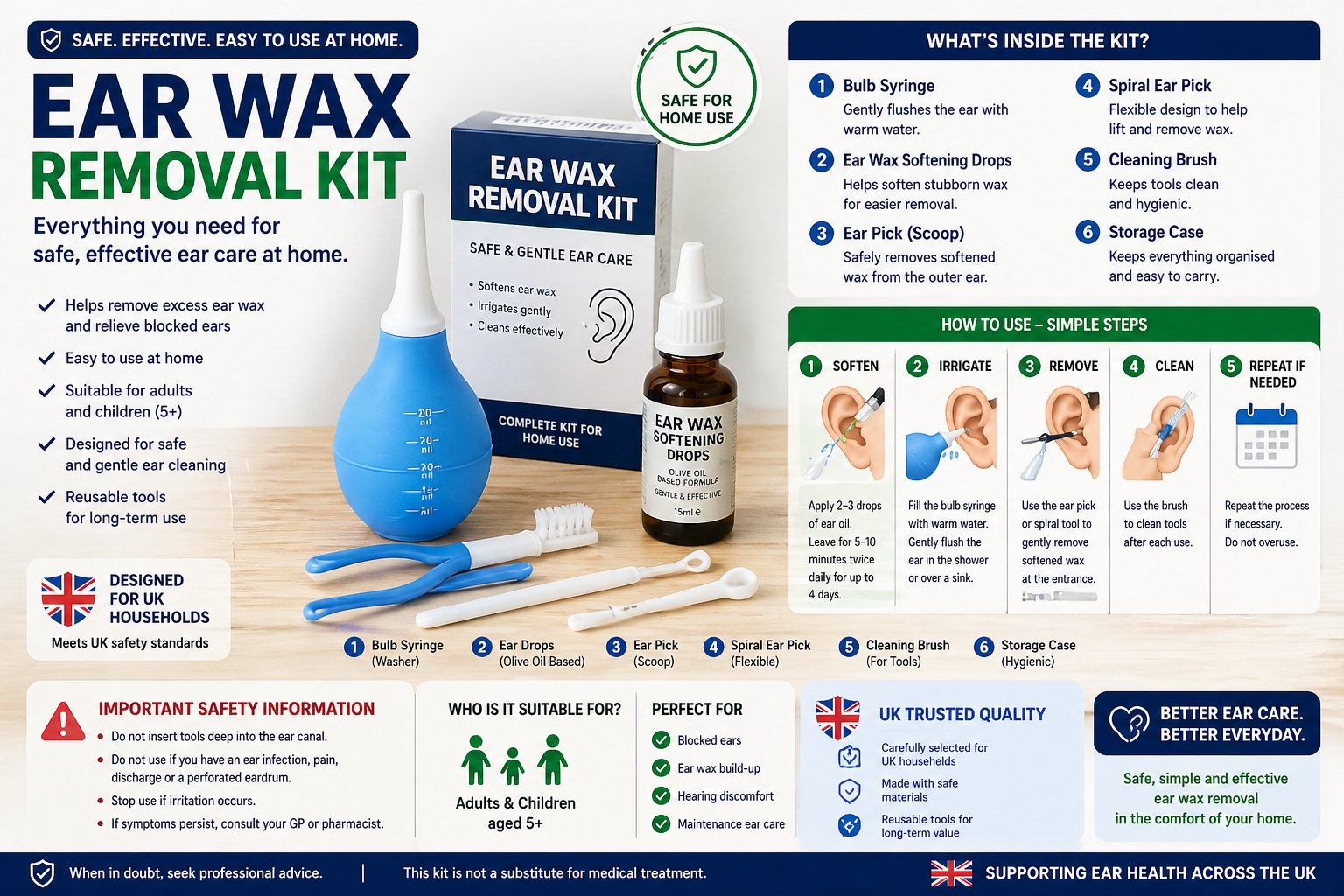
Olive Oil and Bulb Syringe Kits
This is the classic, NHS aligned option and remains the most widely recommended starter kit for British adults. A typical example contains a small bottle of pharmaceutical grade olive oil drops or spray, a soft rubber bulb syringe of around 50 to 100 millilitres, and a basic instruction leaflet. You soften the wax for several days using the oil, then gently flush the ear with warm water from the bulb. Brands such as Earol, Otex, and various supermarket own labels sell similar bundled kits at a very modest price point, usually between £6 and £15.
Hydrogen Peroxide Drop Kits
These kits use urea hydrogen peroxide as the active softener rather than oil. Otex Express and similar products release oxygen inside the ear canal, mechanically breaking up the wax. The kit will usually include the drops themselves and sometimes a small applicator or syringe. They tend to act faster than oil based options, often within three to five days, but some users find the bubbling sensation a little intense.
Bulb Syringe Only Kits
Some products focus solely on the irrigation tool, supplying a higher quality bulb syringe with a curved tip designed for ear use, a drainage cup, and a small towel. These are intended to be paired with separately purchased softening drops. They suit people who already use olive oil regularly and simply want a better quality irrigation tool than the basic versions found in starter kits.
Visual Inspection Kits with Cameras
A more recent category combines a small endoscopic camera that connects to your smartphone with a soft silicone scoop or pick. The camera lets you see inside your ear canal in real time on your phone screen. These kits, sometimes branded as Bebird, Vitcoco, or similar, have grown popular on Amazon UK in particular, but they come with significant caveats that we address in detail later in this guide.
Specialist Microsuction Style Devices
The newest and most expensive category attempts to mimic clinical microsuction at home, using a small motorised suction unit with disposable tips. Prices range from around £40 to over £150. The honest assessment is that home microsuction devices do not deliver clinical levels of suction, and audiologists generally regard them as more gimmick than genuine clinical tool. They may help with very loose, soft wax in the outer canal but should not be used for impacted wax.
What Should a Good Ear Wax Removal Kit Contain?
If you are buying a kit for the first time, look for one that includes the following. A complete starter kit need not be expensive, but it should be properly assembled.
- A softening agent: Most reliably olive oil drops or spray, sodium bicarbonate solution, or a urea hydrogen peroxide product. The softener does the real work of any home removal session.
- A soft rubber bulb syringe: Look for medical grade silicone or rubber, a tip designed for ear use rather than a generic baby aspirator, and a capacity of at least 50 millilitres for a meaningful flush.
- A drainage cup or basin: A small, lightweight, kidney shaped cup that you can hold under your ear during irrigation. This stops water and wax dripping onto your shoulder or floor.
- Clear written instructions: Ideally with diagrams, written in plain English, and including warnings about when not to use the kit.
- A clean storage pouch or box: Hygiene matters, and the bulb syringe in particular should be stored clean and dry between uses.
You do not need a fancy LED ear pick, a metal curette, a rotating “wax catcher”, or any other novelty implement. None of these add genuine value, and several actively increase the risk of harm.
Are Ear Wax Removal Kits Safe?
This is the most important question in the whole guide, and the answer is genuinely nuanced. The simple, well designed olive oil and bulb syringe kit is safe for the vast majority of healthy adults when used as directed. The NHS, the British Society of Audiology, and most UK ENT specialists agree that a softener combined with gentle warm water irrigation is a reasonable home approach for mild to moderate wax build up.
However, certain types of kit and certain user groups carry real risks, and it is essential to know which is which before you spend any money.
Who Should Not Use a Home Kit
- Anyone with a history of perforated eardrum, including childhood grommets that may have left a small hole.
- Anyone who has had ear surgery of any kind, including cholesteatoma surgery, mastoid surgery, or stapedectomy.
- Anyone currently experiencing ear pain, discharge, or recent sudden hearing loss.
- People with a history of recurrent ear infections, particularly otitis externa.
- People with diabetes or compromised immune systems, who are more vulnerable to ear infections.
- Children under 16 should not have wax removed at home with a kit. Paediatric ear care should be done through your GP or a registered audiologist.
Specific Tools and Methods to Avoid Entirely
Even within the broader market of “ear wax removal kits”, several specific products are best avoided regardless of how well they are marketed.
- Ear candles: Despite continued availability in some health food shops and on Amazon UK, ear candles are categorically not recommended by the NHS. They do not draw out wax, and they carry real risks of burns, eardrum perforation, and wax deposits from the candle itself falling into the canal.
- Metal curettes and ear picks: Sold as “ear cleaning tools”, these stainless steel or plastic picks are designed for use by trained practitioners under direct visual control. Using one yourself, even with a small camera, is a leading cause of preventable eardrum injury.
- Spiral or screw type wax extractors: Often marketed with names such as “Smart Swab”, these plastic spiral tips are pushed and rotated into the ear. They impact wax further rather than removing it, and they can scratch the canal lining.
- Suction or vacuum cleaners advertised as ear devices: Some Amazon listings still appear for low cost battery powered “vacuums” that claim to remove wax. These do not produce sufficient or appropriately controlled suction and can damage the eardrum if pressed too close.
How to Use an Ear Wax Removal Kit Safely
A well chosen kit is only useful if used correctly. The process below assumes you have an olive oil and bulb syringe kit, which is by far the most common and most appropriate option for first time users in the UK.
Step One: Soften the Wax for Several Days
Do not attempt to irrigate dry, hard wax. This is the single most common mistake people make. Begin by applying two to three drops of olive oil into the affected ear twice daily for at least five days, ideally seven. Lie on your side with the ear facing upward, gently pull the outer ear up and back, and apply the drops. Stay still for ten minutes. This phase is not optional and not negotiable. Skipping it makes irrigation uncomfortable, ineffective, and more likely to cause minor injury.
Step Two: Prepare for Irrigation
On the day you plan to flush the ear, fill a clean container with water that is genuinely body temperature. Test it on the inside of your wrist as you would a baby’s bottle. Cold water can cause significant dizziness, and water that is too warm can be uncomfortable. Have a clean towel, the drainage cup, and a small basin or sink ready.
Step Three: Position Yourself Properly
Sit upright with your head tilted slightly so the affected ear faces downward over the drainage cup or basin. Place the towel over your shoulder. Pull the outer ear up and back gently to straighten the canal.
Step Four: Fill and Direct the Bulb Syringe
Squeeze the air out of the bulb, then submerge the tip in your warm water and release to fill it. Insert the tip just inside the ear opening, being careful not to push it deep into the canal. Squeeze the bulb gently and steadily, directing the stream of water along the upper wall of the ear canal rather than straight at the eardrum. This angle allows the water to flow in, swirl around, and drain back out, carrying softened wax with it.
Step Five: Repeat and Drain
Repeat the gentle flushing several times, allowing water and wax to drain into the cup between attempts. You may see small chunks of softened wax in the drainage water, which is exactly what should happen. If after five or six attempts no wax is emerging, stop. Continued aggressive irrigation will only irritate the canal.
Step Six: Dry the Ear Carefully
After irrigation, tilt your head to the side and let any remaining water drain out naturally. You can dab the outer ear with a soft towel, but do not insert anything into the canal. If you have a hairdryer, the lowest, coolest setting held a comfortable distance from the ear can help dry residual moisture, which reduces the risk of swimmer’s ear or otitis externa.
Step Seven: Clean the Kit
Rinse the bulb syringe thoroughly with hot soapy water, squeeze out all moisture, and leave it to air dry completely before storing. Bacterial growth inside damp bulbs is a real and avoidable cause of ear infections in repeat users.
Best Ear Wax Removal Kits in the UK
There is no single “best” kit because the right choice depends on your needs, but the following examples consistently appear in UK pharmacist recommendations, audiologist reviews, and customer feedback in 2026. Prices and specific bundle contents change, so always check the current pack contents before buying.
Earol Olive Oil Spray
Earol is widely regarded as the leading olive oil based product in UK pharmacies. The spray delivery is more comfortable for most users than traditional drops, and it is frequently recommended by GPs and pharmacists as a first line softener. Bundled kits are sometimes available with a basic bulb syringe, or you can buy the spray separately and pair it with a syringe of your choice.
Otex Express Combi Pack
This kit combines urea hydrogen peroxide ear drops with a small bulb syringe in a single pack. Otex is one of the longest established UK brands in this space, and the express formula is designed to work faster than traditional softeners. Best suited to people who have used drops before and want a quicker result.
Cerumol Olive Oil Ear Drops
A long established UK brand, Cerumol’s olive oil drops are a reliable softener. Cerumol also produces a stronger drop containing chlorbutol and arachis oil, but the basic olive oil product is the most widely tolerated and is suitable for sensitive ears.
Pharmacy Own Brand Kits
Boots, Superdrug, and Lloyds Pharmacy all offer own brand olive oil drops and bulb syringes at lower price points than the major brands. Quality is generally good, and these are perfectly acceptable starter kits if budget is a consideration. Do read the labels carefully, as own brand bulbs are sometimes smaller than ideal.
Wax Off and Similar Generic Bundles
Numerous Amazon UK bundled kits sold under names such as Wax Off, Earwax MD, Wax Rx, and others combine drops, a bulb, and a drainage cup. Quality varies enormously. Stick with kits that have hundreds of detailed reviews, mention NHS or audiologist input on the packaging, and use recognisable softening agents rather than mystery proprietary blends.
Where to Buy an Ear Wax Removal Kit in the UK
You have plenty of options across the high street and online, and prices in 2026 are broadly competitive. Here is a practical overview of where most British buyers find their kits.
Boots
Boots stocks a comprehensive range of softening drops, bulb syringes, and combined kits both in store and online. Their pharmacist staff can advise on which product suits your situation, which is genuinely useful if you are unsure where to start. Boots own brand olive oil drops are particularly good value.
Superdrug
Superdrug carries a more limited but still respectable range of ear care products, with similar pricing to Boots. Their own brand and the major UK ear care names such as Earol and Otex are usually available.
Lloyds Pharmacy and Other High Street Pharmacies
Independent pharmacies and the smaller national chains all stock at least a basic selection of softening drops. If your local pharmacy does not have what you need, they can usually order it within a day or two.
Supermarket Pharmacies
Tesco, Sainsbury’s, ASDA, and Morrisons all have in store pharmacies that stock the major UK ear care brands. Convenience and competitive pricing make these a sensible option if you happen to be doing a weekly shop.
Amazon UK
Amazon offers the widest range, including imported and specialist kits not seen on the high street. The trade off is variable quality control. Read reviews carefully, particularly any negative ones, check that the seller is a reputable UK based pharmacy or established brand, and avoid anything that makes outlandish claims about instant results or “deep clinical suction”.
Direct from Brand Websites
Several major brands such as Earol sell directly through their own websites, sometimes with bundled offers and free delivery on multipacks. This is a good option if you have already settled on a particular product and want the most reliable supply chain.
How Much Should You Pay for an Ear Wax Removal Kit?
Pricing for home kits in the UK in 2026 falls into clearly defined bands, and paying more does not always mean getting more.
- Basic softening drops alone: £4 to £8 for a bottle that lasts most users a full course or two.
- Drops plus basic bulb syringe: £8 to £15 for a complete starter kit suitable for first time users.
- Premium branded kits with drainage cup and quality syringe: £15 to £25, generally well worth the modest extra cost.
- Camera based inspection kits: £20 to £50, with significant caveats discussed below.
- Home microsuction style devices: £40 to £150, generally not recommended over professional microsuction at a similar or lower total cost.
For perspective, a single private microsuction appointment in the UK typically costs between £45 and £85 per ear at clinics such as Boots, Amplifon, or independent audiology practices. If you are likely to need professional removal in any case, the maths often favours simply booking a clinical appointment rather than buying a more expensive home device.
Ear Wax Removal Kit with Camera: Are They Worth It?
The rise of smartphone connected ear cameras has been one of the most striking shifts in the home ear care market over the past three years. On the face of it, being able to see inside your own ear canal seems like a sensible idea. In practice, the picture is more complicated.
For pure visual inspection, a quality ear camera can be genuinely informative. Confirming that wax has cleared after a course of drops, monitoring an ear that is prone to recurrent build up, or simply understanding what is going on inside the ear are all reasonable uses. The Vitcoco app and similar systems referenced in our main ear wax pillar guide serve this monitoring function reasonably well.
The problem arises when these cameras are bundled with metal or plastic ear picks and marketed as full removal kits. Watching a live video of the inside of your ear does not give you the clinical training or steady hand needed to manipulate a tool inside that delicate space. Audiologists train for years to perform what looks like a simple procedure, and home users with a camera and a pick frequently scratch the canal, push wax deeper, or in worst cases damage the eardrum. The visual feedback can give users a false confidence that is not matched by their actual technique.
The honest recommendation is this. If you want a camera for inspection only, that is fine, but treat it as a monitoring tool rather than a removal tool. Use softening drops and gentle irrigation as your actual removal method, and let the camera confirm whether further action is needed.
Ear Wax Removal Kits for Specific Situations
Different users have different needs, and a kit that suits one person may be wrong for another. Here is how to think about your specific situation.
Hearing Aid Wearers
If you wear hearing aids, you are at higher risk of wax build up because the devices physically obstruct the ear’s natural self cleaning movement. A good approach is regular maintenance with olive oil drops once or twice a week, combined with annual professional cleaning by your audiologist. A full removal kit is best used only when you actually have a blockage, not as routine care. Always remove your hearing aids before applying drops or irrigating, and let the ears dry fully before reinserting them.
People with Recurrent Wax Build Up
Some people simply produce more wax than average, or have ear canals that do not self clean efficiently. If this describes you, having a quality kit on hand for occasional use is sensible. A weekly maintenance dose of olive oil during winter months, when wax tends to harden, can prevent full blockages from forming.
Older Adults
Wax becomes drier and harder with age, which makes home removal both more necessary and more difficult. Older users in particular benefit from longer softening periods of up to two full weeks, gentler irrigation, and a lower threshold for switching to professional microsuction if home treatment fails.
Travellers and Frequent Flyers
Air travel can exacerbate the discomfort of an existing wax blockage by changing pressure dynamics in the ear. A small olive oil spray such as Earol fits easily in a toiletry bag and is genuinely useful to have on hand for both prevention and mild treatment during longer trips.
Children Aged 6 to 16
Home kits are not appropriate for children. The NHS and most UK paediatric ear specialists advise that ear wax in children should be assessed and managed through a GP or a qualified audiologist. Children’s ear canals are smaller and more delicate, and the risk of injury from home tools is substantially higher than in adults.
What to Do If a Kit Does Not Work
A well chosen kit, used correctly, resolves the majority of mild to moderate wax problems within a fortnight. If yours has not, do not keep escalating your home efforts. The wax may simply be too hard, too deeply impacted, or sitting in a position that home irrigation cannot reach. Continuing to flush more aggressively is far more likely to damage the canal than to dislodge the wax.
The sensible next step is professional assessment. Most parts of the UK now have private microsuction available within a short drive, with appointments typically costing between £45 and £85 per ear. NHS provision varies considerably by area, and many GP practices no longer perform irrigation themselves, but it is still worth contacting your surgery to ask what is locally available. Our pillar guide on how to remove ear wax blockage covers professional options in considerably more depth.
When to Stop Using a Kit and See a Professional Immediately
Stop using your home kit and seek prompt medical advice if any of the following occur. These are warning signs that something more than wax is happening inside the ear.
- Sharp or severe pain during or after irrigation.
- Sudden hearing loss after using the kit, particularly if profound.
- Bleeding, even minor, from the ear canal.
- Discharge that is yellow, green, or foul smelling.
- Fever or feeling generally unwell alongside ear symptoms.
- Significant dizziness or balance problems.
- Symptoms that develop after a head injury.
None of these should be ignored. They are not normal reactions to home irrigation, and they may indicate eardrum injury, a middle ear infection, or another condition that needs medical evaluation rather than further home treatment.
Frequently Asked Questions About Ear Wax Removal Kits
Are ear wax removal kits available on the NHS?
The NHS does not typically provide complete home removal kits, but GPs and pharmacists may recommend specific over the counter softening drops as part of self treatment. In some areas the NHS still offers ear irrigation through GP practices or community audiology services, although provision has reduced significantly in recent years. Most British adults now buy their own kit from a high street pharmacy.
Can I use a baby nasal aspirator as an ear bulb syringe?
Technically a soft rubber nasal aspirator can be used in the ear, and many cheap ear care bundles essentially repurpose nasal bulbs. However, dedicated ear syringes have a slightly firmer, contoured tip that sits more safely at the ear opening. If you are buying new, choose one designed for ear use.
How often can I use an ear wax removal kit?
Home kits should not be used as routine ear cleaning. Use them only when you actually have symptoms of wax build up, and ideally no more than two or three times a year for any one ear. Overuse strips the protective wax layer, dries out the canal lining, and can paradoxically increase the production of new wax as the body tries to compensate.
Is it safe to share an ear wax removal kit with family members?
The drops themselves can be shared, but the bulb syringe and any reusable tools should ideally be personal to one user. If sharing is unavoidable, the bulb must be thoroughly cleaned with hot soapy water and dried fully between users. Disposable single use tips, where available, are a sensible upgrade for shared family use.
Can I use an ear wax removal kit while pregnant?
Olive oil drops and gentle warm water irrigation are both considered safe during pregnancy. If you have any concern, particularly during the first trimester, it is reasonable to check with your GP or pharmacist before starting. Avoid medicated drops containing chlorbutol or other active ingredients during pregnancy unless specifically advised by a healthcare professional.
What is the difference between an ear wax removal kit and ear drops?
Ear drops are the softening agent alone, whereas a kit combines drops with the tools needed to remove the softened wax, typically a bulb syringe. For very mild build up, drops alone may be enough, as the softened wax often migrates out naturally. For more significant blockages, the irrigation step that a kit enables is usually needed.
How long does an ear wax removal kit last?
The drops themselves typically have a shelf life of two to three years unopened, and around six months once opened. The bulb syringe should last for several years if cleaned properly, although a new bulb every twelve months is a sensible refresh, particularly for regular users.
Can ear wax removal kits cause infections?
Yes, although uncommon, infections can occur, usually because of inadequate drying after irrigation or contamination of a poorly cleaned bulb syringe. Always dry the ear thoroughly after use, clean the syringe properly, and never use a kit if you have any active ear infection or open wound in the canal.
Are there any ear wax removal kits to avoid?
Yes. Avoid anything involving ear candles, metal curettes, spiral or screw type plastic picks, and battery powered “vacuum” devices marketed for ear use. Any kit promising results in seconds, dramatic before and after photographs, or “professional clinical” results from a low cost device should be approached with significant scepticism.
What is the best ear wax removal kit for sensitive ears?
For sensitive ears, the gentlest combination is medical grade olive oil drops or spray, used over a longer softening period of up to two weeks, followed by very gentle irrigation with body temperature water. Avoid hydrogen peroxide based drops if you find sensations like fizzing or bubbling uncomfortable, and stick with traditional oil based softeners.
Summary: Choosing the Right Ear Wax Removal Kit
For the majority of British adults dealing with mild to moderate wax build up, a simple olive oil and bulb syringe kit costing between £8 and £20 will resolve the problem safely and effectively when used patiently and correctly. Brands such as Earol, Otex, and Cerumol have decades of clinical track record behind them and remain the sensible default choice. Avoid the temptation of camera bundled kits with metal picks, ear candles, and any device promising results that sound too good to be true.
The single biggest factor in success with any kit is patience. Soften the wax thoroughly for at least five to seven days before any irrigation attempt, use water at genuine body temperature, direct the stream gently along the upper canal wall, and stop the moment anything feels wrong. If your kit has not resolved the problem within a fortnight, do not persist. Book a professional microsuction appointment, which will resolve the issue quickly and without further risk.
For the broader picture of how home removal fits into the full landscape of UK ear care, including detailed comparisons of professional methods, regional service options, and prevention strategies, our parent guide on how to remove ear wax blockage is the natural next read. Used together, the two guides should give you everything you need to manage your ear health confidently and safely.